(The news that a New England prep school has
dismantled its entire library to replace it with computers and e-readers keeps the idea of "bookless libraries" in the news. Since the
headmaster's rationale cites SU's Dean of Libraries,
Suzanne Thorin, I'm posting here a piece I wrote last November when the controversy first hit Syracuse University.)
Worries about the future of books hit home recently on the campus where I work. The university library announced plans to dispose of some materials and move many more books to a commercial storage facility across the state in order to free space in the stacks for new acquisitions. These plans came soon after renovations transformed two of the library’s seven floors from book stacks into a coffee shop, a computer commons, “collaborative learning spaces” (i.e. tables with chairs), and classrooms. So the announcement of deacquisition and off-site storage plans prompted
an uproar among humanities faculty members and students, producing 113 faculty signatures (including mine) on
two letters of protest. Faculty in the sciences and social sciences soon circulated their own protest letters in solidarity with the humanists’ initiatives. A student petition against the plan garnered more than 1000 signatures. All demanded greater consultation and collaboration in developing library collections and policies. The library responded with its own letters and policy papers, claiming that it has always sought input, especially from faculty.
Beyond the argument over input on library practices, however, the dueling documents reveal a conceptual gap between the library’s administration and the protestors. Comparing the professors’ letters and the librarians’ policy papers shows that their subjects are completely different. The library’s policies focus on “information”—how and by whom it is accessed, distributed, analyzed and used. The faculty’s letters almost never mention that word; only the social scientists use it at all. The letters focus instead on the importance of reading physical books and documents, browsing stacks and viewing fold-out charts and maps. The library letters emphasize collaborative learning while the professors focus on the needs of solitary researchers. The library invokes utility while the faculty worry about recruitment and institutional prestige. The different subjects of the dueling documents show that this dispute involves very different ideas about books.
The whole affair could be dismissed as one more academic tempest in a teapot were it not for the much wider debates over the role of libraries on college campuses, over the state of book publishing and marketing, and, of course, over the future of books themselves. Like most long-standing social institutions, libraries are more than just mechanisms for providing particular services. They symbolize a cultural ideal. But libraries exemplify that ideal only by virtue of the books they house. Questions about the roles of libraries are, at bottom, questions about the significance of books.
Missing in this debate has been any exploration of the values that modern societies invest in books. As it happens, my university also hosts an interdisciplinary research program aimed at documenting and analyzing precisely this question across history and diverse cultures. I am co-founder of the Iconic Books Project, and so have followed the library debate with particular interest. It has prompted me to imagine how an iconic books perspective can help us understand the values attached to browsing stacks, material books, and library architecture.
The Importance of Browsing
Complaints against both digitized texts and off-site storage of library books frequently evoke the experience of browsing library shelves. Faculty members report the benefit of getting an overview of an entire subject contained in a collection. They repeat stories of finding just what they were looking for in the book next to the one they came into the stacks to collect. They celebrate how browsing stacks can produce random juxtapositions that neither cataloguing systems nor their own research plans anticipate, yet which provide the key to resolving their problem or to setting their research onto a new and more productive path. For them, this kind of browsing is not possible with either a catalog or an internet “browser” because its success depends on the physical juxtaposition of books on a shelf.
The open-stack library that makes browsing possible manifests an old idea. The notion that the contents of texts should be randomly accessible has slowly grown in strength over three thousand years. It decisively shapes the physical forms of books as well as libraries.
Ancient Egyptian and Mesopotamian libraries were owned by temples and royal courts who strictly limited access to their priests and officials. When new religions made knowledge of their sacred texts public instead of keeping them secret, public reading and interpretation became a standard element in Jewish, Christian and Muslim worship. At first, the books were scrolls whose pages were sewn together edge to edge. Scrolls must be read sequentially, either the whole text at once or sections over a series of sessions. In synagogue services, Torah scrolls are still read sequentially over a year. The scroll form makes it hard to compare different parts of the same book, and it cannot be opened randomly.
Ancient Christians adopted a different technology for their sacred books, one that binds together sheets of parchment or paper on a single edge. This is called a codex and is the form that almost all books take today. The codex allows you to skip from one part of the book to another easily, to compare different sections, to read in any order that you want, and even to read randomly by letting the book fall open. People of various religious traditions still use random access to divine in scriptures a message appropriate to their circumstances.
The public library movement of the nineteenth and twentieth centuries made volumes of literature and information much more widely available, often in the form of open stacks libraries that allow the public to browse the shelves. Open stacks multiply the advantages of codex technology. You can access as many volumes as you can lay your hands on in any way you wish, including randomly. Open stacks represent the reader’s complete control over the physical process and sequence of reading. Refusing such access by storing volumes off-site or on-line feels like imposing the textual strait-jacket of a scroll on readers who have become used to the freedom of a codex.
Attention to the physical form of texts reminds us that reading is an embodied practice. You must hold a book physically, brace it with your hands or put in on a table, position your body in certain ways and, of course, focus your eyes in order to read. Working on computers or e-readers requires different physical activities that have provided much fodder to debates about e-books.
But here I want to point out that visiting a library is also an embodied practice. Walking into the building, navigating the stacks, sitting in carrels to study your finds, and checking out and carrying away the most promising books comprise physical routines that have long characterized the scholar’s lifestyle. The convenience of electronic texts and computerized catalog searches that deliver texts to you is offset by constricting the physical scope of your research activities to your own desk and computer. This loss may be felt especially keenly by faculty and students in the humanities whose research already tends to be the most individualistic of all the disciplines in the university and, therefore, the most isolating. For them, trips to the library have traditionally provided a physical research activity that many are sorry to see go.
Material Books and the Desire for Textual Permanence
Books represent more, however, than just the reader’s control over the reading process. They are powerful cultural symbols. Books matter because they are material manifestations of our culture’s ideals: educational ideals, political ideals, philosophical ideals, and religious ideals. They represent our best hopes for ourselves. But ideals can be hard to remember, much less live by. Books seem to preserve our values in physical objects. They are material manifestations of whatever we hold most dear. And when we struggle to know what that is, we can read books to remember what we’ve forgotten.
To a great degree, therefore, the cultural significance of books involves old knowledge. They represent our desire for old knowledge even while publishing new information. The publishing business, of course, wants new products to sell. Professors, especially those in the humanities, want to write and sell books. Research universities require them to do so. As a result, more books are published every year than the year before, and research libraries find themselves losing ground and floor-space in the effort to keep up. But unlike chain bookstores, libraries owe their cultural prestige to their role in preserving old books as much as in acquiring new ones.
Many fields of the humanities as well as qualitative fields in the social sciences promulgate old knowledge preserved in books. Of course, humanists also conduct creative research, use electronic resources and expect the most recent intellectual trends to appear on their library’s shelves. But their teaching tends to be book-centered and many of those books are old. In courses in literature, philosophy, history, and religion, students’ work consists mostly of reading books, often primary texts. Distinguishing primary from secondary sources is a hallmark of humanistic research that emphasizes the importance of reading authors from diverse times and cultures. Many professors in such classes teach book in hand, modeling by their own performance a text-centered way of thinking. Explicit in such performances is the assertion that these old texts still have important things to say to contemporary students. Implicit is the hope that, in this or another book, we may find forgotten wisdom that could benefit us and our society.
Such pedagogies reflect wider cultural commitments. Human cultures tend to vest some material objects with important, even transcendent, meanings. Objects like national flags, religious art, and grave markers evoke powerful emotions and motivate the behavior of very many people, no less today than in the past.
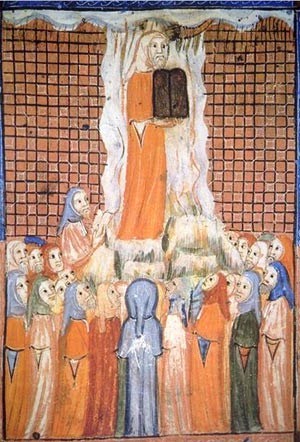
Books also evoke powerful emotions and symbolic connotations. That is most obviously the case for religious scriptures. The Torah, Bible and Qur’an, to name only three, function as icons not only for Jews, Christians and Muslims, but also serve as powerful symbols of those religions within the wider culture. But many other books also exhibit iconic qualities, if not to the same degree. The image of the book (codex) appears in art and other visual media to represent knowledge and learning. It is a conventional prop in the portraits of scholars and writers. Many universities put images of books on their institutional seals.
Material books evoke a semi-sacred sense in many people. They will therefore go to great lengths to avoid destroying them. Librarians, who must dispose of redundant or out-of-date volumes, have told me stories of loading the dumpster at night so as not to be seen. The cultural roots of this antipathy run deep. Memories of cultural loss because of mass book destructions lie at the roots of both Chinese and Western cultures: the first Quin emperor ordered the destruction of most forms of literature in 213 B.C.E, while Roman troops accidentally burned the library of Alexandria in 48 B.C.E. Historians debate the accuracy of both stories, but that has not lessened their cultural significance. Conflict between and within religious traditions has frequently included destroying books and attacking their owners. These were also prominent practices of totalitarian governments and political movements in the twentieth century. As a result, book burning remains one of the most outrageous activities in contemporary culture, closely followed by attempts to ban books from libraries or bookstores.
From a practical point of view, all of this is inexplicable. Books are very common and widely distributed commodities. The destruction of one copy or even many copies will not seriously threaten the availability of mass marketed books. But such practical observations do nothing to lessen the iconicity of books. Most religious scriptures are even more widely distributed, often in very inexpensive form, and so common that the destruction of tens of thousands of copies would not seriously affect access to their texts. Yet news of scripture desecrations arouses very strong fury and catches the attention of the world’s news media. The iconic status of books in contemporary culture is unaffected by their ubiquity or commercial value.
So research libraries in the early twenty-first century find themselves in a difficult predicament. On the one hand, the ever-rising number of academic publications and ever-expanding scope of scholarly interests puts enormous pressure on their acquisitions budgets and their shelf space. It is understandable that the advent of electronic texts might look like a timely technological fix to these woes. On the other hand, the broader society privileges research libraries—and the universities that support them—as conservators of intellectual culture. The prestige of a university is often crudely calculated by the sheer number of volumes in its collections. (Even more extreme examples of the social priority on book conservation can be found in national depository libraries like the U.S. Library of Congress and the British Library, which try to collect most if not all books published in their countries.)
E-books do not serve this desire to preserve culture in books very well. Electronic texts are an ephemeral textual medium, like chalk boards. And like chalk boards, preserving electronic texts depends on frequent copying, though they are much easier to reproduce. They show absolutely no promise for permanence, however, either physically (on various kinds of computer hardware all of which suffers rather rapid physical decline and even more rapid technological obsolescence) or culturally (due to ever-changing software that overwhelms the human expertise needed to operate old systems). The widespread hope that constant copying and upgrades will preserve e-texts long term shows remarkable ignorance of human history. When physical, economic, and political systems can all be disrupted on a catastrophic scale—as they were several times in the twentieth century alone—systems that depend on power and communication networks cannot be trusted as reliable long-term repositories of cultural memories.
The research university library has served the function of cultural repository for centuries. Though its collections can also be destroyed by war and other catastrophes, books at least do not require dedicated electrical technologies in order to work. They need only a human eye and a mind that understands the language and script they contain, and even that knowledge can often be reconstructed after being lost.
Books preserved in libraries of various kinds have proven to be the most reliable, flexible, and portable technology for long-term cultural preservation for the last two thousand years. That is why books symbolize the preservation of cultural ideals, and that gives them a lot of cultural prestige. Libraries that appear to abandon the role of book preservation lose the prestige that goes with it.
Architectural Values
On university and college campuses, library buildings share the culture’s symbolic investments in the books they contain. It is a very old religious idea that books of scripture convey some of their importance to the buildings that house them. A synagogue is holy because of the sacred Torah scrolls it contains, a Sikh gurdwara is a shrine for the Guru Granth Sahib, and a mosque is holy to many Muslims because of its Qur’ans. Buddhists as well as Christians have frequently treated books of scripture just like the relics of saints, and the boxes and buildings that contain them as reliquaries.
Library architecture often reflects this tradition by imitating Greek temples or Gothic churches. University professors and administrators frequently claim that the library is the heart and soul of the university, but university crests show that the real referents are the books inside those libraries.
This architecture and rhetoric do not make casual claims. They tie the university’s identity to material artifacts—books—that exemplify learning and wisdom, in contrast to other campus architecture—such as the football stadium—that emphasizes very different cultural values. Library policies therefore evoke heated debates because the cultural identity of universities in general, and the humanities in particular, are at stake. Books matter because they are the icons for such values. A university without a book-stuffed library is a university without a soul.
I hope that will not be the case at my university. Greater collaboration between faculty and librarians should result in more books on open stacks, and that will represent a tangible recommitment to the university’s role as a cultural conservator.
Besides, that investment will benefit the university’s research programs in another way: those books contain lots of interesting information too!
© 2009 James W. Watts


 Posts





 See the


 Kniga nichto inoe kak chelovek, govoriashchii publichno. [The book is nothing else than a publicly speaking person.] (1920).